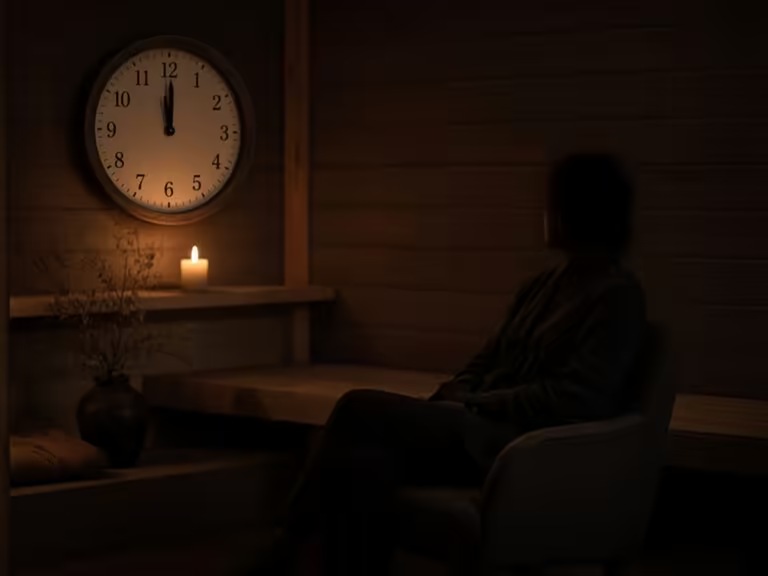
During a dark retreat, the participant stays alone in a completely dark space with no light getting in. Soundproofing is not usually the aim, just a bonus.
But how does a dark retreat go when the participant doesn’t even want to talk to the guide? We could divide dark retreats according to how much people want to chat.
The dark retreat as a debating club

Since the most common recommendation during a dark retreat is to do nothing, participants often start to get bored. They chase this boredom away by wanting to chat with the guide, once the food has been brought, about anything that comes to mind. The aim is not to learn something or share something; the aim is to pass the time. This can lead to monologues lasting up to an hour about their work, their relationship, children, neighbours or their own view of superstring theory. Sometimes it is a developmental phase and sometimes it is an everyday experience. The next most common aim is to get attention, which is not so much about passing the time as about complaining about the hardships of life, or, on the contrary, showing off one’s successes.
A dark retreat with contact
Experience most often shows that participants do talk when they are in contact with the guide. At the very least they exchange a greeting and a few words about how they slept, how they are doing and so on. Briefly sharing a dream, or how they are currently experiencing themselves, is also completely normal. A very interesting part of the contact is when participants don’t want to be told what food they have today, because they want to work it out for themselves. So sometimes they ask what the food actually was yesterday 🙂
A dark retreat without contact
This kind of dark retreat can be practised by anyone and at different levels, depending on how the participant feels. The guide just says hello, brings the food and leaves. It is even possible not to speak to the participant at all. The only contact can be a knock, with an answering knock from the participant to say they are OK.
The highest form of contact-free darkness therapy is when the participant asks for food for the whole retreat in advance, usually fruit, or keeps a cleansing fast, and does not want any contact at all. In that case they are undisturbed for the whole dark retreat, and participants often report that they had no idea what day it was and are surprised that the dark retreat is already ending when the time comes to leave the sanctuary.
A dark retreat is beneficial for every talking type of participant.
No matter how much the participant wants to talk or to stay silent. Participants usually communicate in waves. What always matters is that the participant controls how much communication there is. When they want silence, they have it; when they want to share, they can. The guide never pries or persuades them to talk when they want silence, and the other way round.