608 08 33 33

A one-night dark retreat is nothing to be ashamed of

“Just one night? That doesn’t really count, does it?” We hear this quite often — usually from people who have been thinking about the dark for months and are still waiting until they can take a whole week off. But waiting gets you nowhere. And one night in the dark is not a dry run or a half-hearted effort.

One night is not half a retreat

In the dark, nobody measures performance. No one gives you a mark at the end for how many nights you lasted. The difference between one night and a week is not that one is “real” and the other isn’t. It lies in how deep you manage to go.

A week gives room to things that need time – memories surfacing, long sleep, thoughts that may only arrive on the fourth day. One night gives you something else: a sudden silence, your first sleep without a screen, and a morning when you notice how loudly you normally live.

Your body doesn’t wait for day seven

Since 2019 we have been running research with the Department of Psychology at the Faculty of Arts, University of Ostrava (led by Mgr. Marek Malůš, Ph.D.). Among other things, they track the endocrine response – melatonin in particular.

It turned out that the body doesn’t switch over slowly across the whole week. The hormonal change sets in within the first 24 hours. So one night is not just a taster – something measurable is happening in your body.

You can find details in the article on dark retreat research with the University of Ostrava.

Who gets the most out of one night

It is most often chosen by four groups: people considering the dark for the first time who want to know what they’re getting into. People who are a little afraid of the dark and need to find out for themselves that nothing bad happens in it. Parents and working people who can’t fit a week into their diary. And those who want to see whether, in six months, they’ll feel ready for a longer stay.

None of these reasons is a weakness. It is a sensible decision by someone who doesn’t want to dive headfirst into the unknown.

What fits into a one-night dark retreat

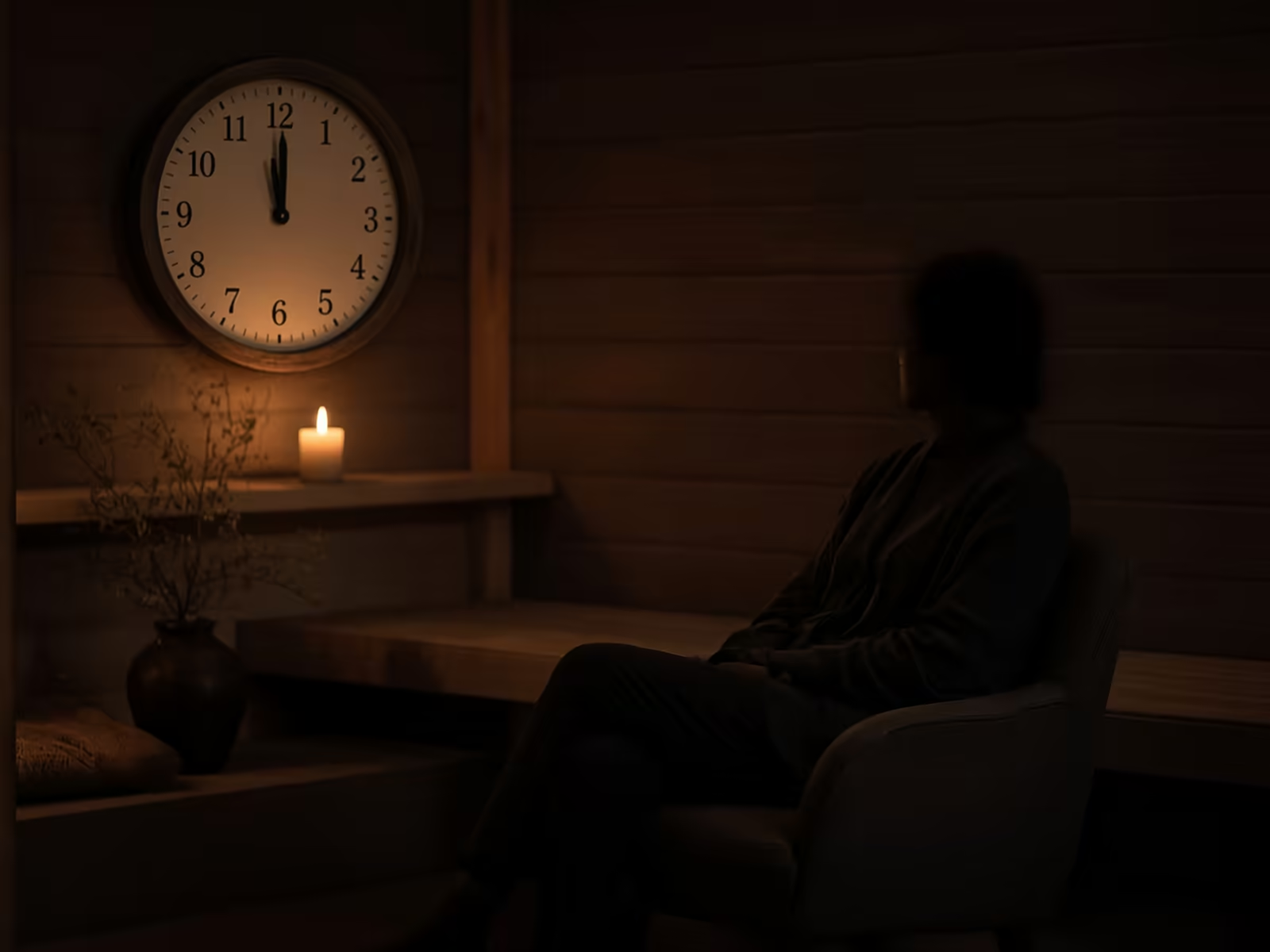
You arrive in the afternoon, go round the cabin by touch with your guide, and the door closes. Dinner in the dark. A silence in which you can hear your own thoughts. And sleep – that is usually the first thing people mention after one night. The dark has no blue light and no distractions.

The next morning you leave knowing what it is like. And that is more than most people arrive with after a year of thinking about it.

And what if you want to stay?

It happens. Sometimes it can be sorted out on the spot, sometimes you simply book another date. Neither is a failure – the dark is not a race.

You’ll find what one night costs in the dark retreat price list.

Next available dark retreat dates

Digital detox: a way out of chaos and back to yourself

We live in a time when screens have become an extension of our bodies. We hold our phones from morning till night. Constant notifications, endless scrolling through social media and the pressure to be “online” all the time take their toll. The result is stress, restlessness, poorer sleep and growing inner unease — in short, what more and more experts call digital overload.

And this is where a digital detox comes in — a voluntary disconnection that is not an escape but a return. A return to yourself, to calm and to real experiences.

Treating social media addiction

Social media addiction today has features similar to any other addiction. With every notification, the brain releases dopamine, the reward hormone. This mechanism makes us check our phones again and again – even though we know it isn’t healthy. Over time we lose the ability to concentrate, to create or simply to be alone with ourselves.

A digital detox helps break this vicious circle. When you manage several days without your phone, your mind begins to loosen, your attention settles and your body learns to rest again.

A dark retreat – the perfect digital reset

Many people choose a dark retreat for a genuine digital detox. Complete darkness quietens the senses and returns body and mind to their natural rhythm. At our centre near Kutná Hora you can do just that — ideally for a week, but your body will thank you even for 3 nights.

On arrival, participants can safely put their phone away in a special locker, so they can be sure nothing will disturb their peace or focus during the retreat.

Silence, darkness and complete disconnection help the nervous system regenerate, improve sleep and completely change how we see our relationship with technology.

Why try a digital detox right now

  • You will improve the quality of your sleep and your ability to concentrate.
  • You will gain distance from the constant information overload.
  • You will rediscover the calm that disappears in everyday life.
  • You will strengthen control over your time and your emotions.

A digital detox is not about rejecting technology but about balance. It teaches you to use your phone consciously — not as a reflex.

Start with a small step

Try at least three nights in the dark – no phone, no social media, just you and the silence. This short return to yourself often brings far more than weeks of holiday full of distractions.

Step off the treadmill of digital addiction. Put your phone down and treat yourself to a real reset – for body and mind.

Upcoming dark retreat dates

Dopamine, reward addiction and why it’s good to rest in the dark sometimes

You may already have heard of dopamine – it is one of the main “happy” hormones in the brain. It works as a chemical messenger that links different activities with a feeling of reward. When you do something pleasant, your brain rewards you with a dose of dopamine, and that motivates you to do it again. Thanks to dopamine, we want to learn new things, be active and enjoy life.

How dopamine works and why we get “hooked” on it so easily

These days, though, we are literally bombarded with quick hits of dopamine – phone notifications, social media, sweets, videos, games… All these things give us instant gratification, and the brain quickly gets used to it. The more of these “quick rewards” we get, the more we crave them. Gradually, though, ordinary everyday experiences start to seem less interesting and the joy we take in them fades.

When we overdo the dopamine stimuli, we can start to feel tired, lose motivation, feel restless inside or even burn out. Suddenly nothing brings us joy and we feel we constantly need something new, something stronger.

Why it’s good to have a “dopamine detox” now and then

Every so often it’s good to give your brain a break from the constant flood of stimuli. When you cut back on all those quick sources of dopamine for a while, your brain starts to appreciate ordinary things again – a walk, good food, a chat with a friend. Your concentration, inner calm and joy in life will all improve.

One of the best ways to truly rest is darkness therapy.

Darkness therapy: how it can help calm your mind

Darkness therapy means going into complete darkness and silence for a few days. No light, no sounds, no phones or internet. Just you and your thoughts. For the first few days you may feel that nothing is happening, but that is exactly where the magic lies – your brain can finally stop and rest from constantly processing information.

What happens in the dark?

  • Fewer stimuli, more calm: Your brain gets the chance to regenerate and slow down.
  • Better sleep and relaxation: Darkness supports melatonin production, so you sleep better and relax more overall.
  • Greater self-awareness: When nothing is distracting you, you start to notice your thoughts, feelings and body more. You can get clear on what matters to you.
  • Restoring the dopamine system: After a dark retreat, even ordinary things will seem more joyful and interesting. You will gain a fresh perspective and new energy.

“Darkness therapy is like a holiday for your brain. In the first days you shed surplus thoughts and gradually settle into calm. When you have nothing to distract you, you really start to give your attention to yourself.”

Who is darkness therapy suitable for?

If you feel tired, restless inside, unmotivated, or you simply long for deep rest, darkness therapy is a great choice. It will help you calm your mind, recharge and find joy in everyday things again. But if you are afraid of the dark or have serious mental health problems, it is better to talk to a professional first.

In short: switch off the world, switch on yourself

Dopamine is great, but too much of it can wear us out and dull us. Darkness therapy gives you the chance to switch off the world around you for a while, calm down and rediscover the joy of ordinary things. It’s not an escape, but a way back to yourself and to real well-being. So, will you give it a try?

Healthy weight loss and darkness therapy: how a dark retreat helps fight obesity

At a time when obesity is becoming an ever bigger problem, people turn to all sorts of methods to achieve healthy weight loss. One of the less usual, yet potentially effective, approaches is a dark retreat. This method, known as darkness therapy, offers a unique way of tackling obesity that focuses on inner transformation and on removing the external triggers of overeating.

How a dark retreat affects our behaviour

A dark retreat has several unique benefits that can contribute to healthy weight loss. When you spend time in the dark, the way you perceive your body changes. In the dark you do not see your physical appearance, which can mean less stress and less of the sense of inadequacy that often comes with being overweight. Taking away these visual, external factors lets you focus on your inner world and your inner processes.

Removing external triggers

Everyday life is full of visual and environmental triggers that can lead to overeating. Food adverts, social media full of food photos, or even just the sight of snacks in a shop can all make you feel hungry. In the dark, these external stimuli disappear, which makes it less likely that you will eat out of emotion or habit. In this way, a dark retreat can help you develop a better relationship with food and how you eat it.

The psychological side of darkness therapy

The psychological side of darkness therapy is just as important as the physical one. In the dark, you are made to focus on your thoughts, feelings and inner processes. This heightened self-awareness can help you recognise and deal with the emotional issues that often lead to overeating. When you understand your emotions and needs better, you are better equipped to avoid unhealthy eating habits and achieve healthy weight loss.

Meditation and relaxation

A dark retreat also supports meditation and relaxation. In a calm, dark environment it is easier to reach a state of deep relaxation, which can help reduce stress and anxiety. These emotional states are often linked to overeating, so easing them can be key to succeeding with healthy weight loss.

Practical uses of darkness therapy

Although darkness therapy may sound like a radical method, there are practical ways to bring it into everyday life. For example:

  • Meditating in the dark: spending a few minutes a day meditating in a dark room can help reduce stress and increase self-awareness.

  • A dark room for sleep: sleeping in a completely dark room can improve the quality of your sleep, which also matters for healthy weight loss.

  • A dark retreat: taking part in a dedicated retreat programme that includes darkness therapy can give you an intense experience of this therapy in as little as a 3-night stay.

Conclusion

A dark retreat, as a form of darkness therapy, offers a unique approach to healthy weight loss. By removing external triggers and focusing on inner processes, you can better understand your needs and develop a healthier relationship with food. Although this method may not be for everyone, it can be a valuable complement to traditional approaches to healthy weight loss. It is important to remember that healthy weight loss is a long-term process that takes patience, discipline and a holistic approach to your overall health.

Burnout: how can darkness therapy help you overcome it?

Burnout syndrome is a serious condition that affects more and more people in today’s rushed times. It shows itself as physical and emotional exhaustion, cynicism and reduced productivity. One of the innovative methods that can help in treating it is darkness therapy. Let’s look at how this approach works and what benefits it can bring to people suffering from burnout.

Symptoms of burnout

Before we turn to treatment, it is important to recognise the symptoms of burnout syndrome:

  • Chronic fatigue and exhaustion
  • Sleep disorders
  • Problems with concentration and memory
  • Physical symptoms such as headaches or gastrointestinal problems
  • Emotional exhaustion and feelings of hopelessness
  • Cynicism and detachment from work and personal life

Darkness therapy as an innovative approach to treating burnout

Darkness therapy, also known as sensory deprivation therapy, involves staying in a completely dark environment for a certain period of time. This approach can be an effective tool in tackling burnout syndrome for several reasons:

  1. Deep relaxation: Darkness supports the production of melatonin, the sleep hormone, which leads to deep relaxation and regeneration.
  2. Stress reduction: Limiting external stimuli helps lower levels of cortisol, the main stress hormone.
  3. Better sleep quality: A dark retreat can help restore a disrupted circadian rhythm, which is often a problem for people suffering from burnout.
  4. Space for introspection: Darkness offers a unique opportunity for self-reflection and processing emotions.
  5. Restoring cognitive function: A break from visual stimuli can help improve concentration and memory.

How does darkness therapy work?

Darkness therapy usually involves staying in a specially adapted dark room for several days. During this time the participant is completely isolated from external visual stimuli. The therapy can be complemented by other techniques, such as meditation or breathing exercises, which can deepen its effect.

Other ways to treat burnout syndrome

Although darkness therapy can be an effective tool, it is important to combine it with other approaches to treating burnout:

  • Psychotherapy, especially cognitive behavioural therapy
  • Lifestyle changes, including regular exercise and a healthy diet
  • Mindfulness and relaxation techniques
  • In some cases, medication under a doctor’s supervision may also be appropriate

Conclusion

Burnout is a complex problem that calls for a thoughtful approach to treatment. Darkness therapy is an innovative method that can make a significant contribution to restoring physical and mental strength. Combining this therapy with more traditional approaches can offer an effective way to overcome burnout syndrome and return to a full life. It is important to remember, however, that everyone is different, so treatment should always be tailored to individual needs and discussed with a professional.

A therapeutic retreat and self-discovery: how darkness reveals our inner world

In today’s hectic world, full of constant stimulation, it can be hard to find the time and space for real self-discovery. A therapeutic dark retreat offers a unique opportunity to dive deep into your inner world, and it can lead to significant personal discoveries. Let’s explore how darkness can act as a catalyst for self-knowledge and personal growth.

What is a therapeutic dark retreat?

A therapeutic dark retreat, sometimes also called a cleansing retreat, is an intensive experience in which you spend several days in complete darkness. This environment, free of visual stimuli, creates unique conditions for introspection and self-reflection.

Key aspects of a therapeutic retreat:

  • Absolute darkness for several days (usually 3-7 days)
  • Minimal outside stimuli
  • Professional guidance and support
  • A safe and comfortable environment

How darkness supports self-discovery

A dark retreat can be a powerful tool for self-discovery for several reasons:

  1. No distractions: Without visual stimuli, the mind naturally turns inward.
  2. Heightened sensitivity: Your other senses sharpen, which leads to a more intense awareness of what is going on inside you.
  3. Altered states of consciousness: Darkness can bring on states similar to meditation or lucid dreaming.
  4. Facing yourself: Without outside stimuli, we have no choice but to face our own thoughts and emotions.

Stages of a therapeutic retreat

Self-discovery in the dark usually goes through several stages:

1. Adjustment

In the first hours or days, your body and mind adjust to the new environment. Restlessness or anxiety may come up.

2. Letting go

Once the initial adjustment is over, a phase of letting go follows. The mind calms down and the body relaxes.

3. Introspection

In this stage, people begin to explore their thoughts, emotions and memories more deeply.

4. Insights and discoveries

Many people experience significant personal insights or “aha” moments during their stay.

5. Integration

The final stage involves a gradual return to the light and integrating what you have experienced.

Challenges and frustrations during the retreat

A therapeutic dark retreat isn’t always easy. You may face various challenges:

  • Frustration: Feelings of boredom or impatience are common, especially in the early stages.
  • Emotional ups and downs: Intense emotions or suppressed memories may surface.
  • Physical discomfort: A change in your daily rhythm can cause temporary physical discomfort.
  • Cognitive challenges: Some people may experience an altered sense of time or reality.

How a therapeutic retreat helps you know yourself

Despite the challenges, a therapeutic dark retreat can bring real benefits:

  1. Deeper self-awareness: People often report a better understanding of their motivations and patterns of behaviour.
  2. Emotional release: Darkness can help release emotions that have been held back for a long time.
  3. Creative insights: Many people experience a surge in creativity and new ideas.
  4. Better mental health: Studies suggest that a dark retreat may help in treating depression and anxiety.
  5. Greater resilience: Overcoming the challenges of the retreat can strengthen your overall mental resilience.

How to prepare for a therapeutic retreat

If you are thinking about a therapeutic dark retreat, here are a few tips to help you prepare:

  1. Set an intention: Get clear on what you want to achieve during your stay.
  2. Prepare yourself mentally: Expect to go through a range of emotions and thoughts.
  3. Talk to a professional: Especially if you have any physical or mental health issues.
  4. Choose a trustworthy centre: Make sure the place has experience and good references.
  5. Stay open: Approach the experience with an open mind and without inflated expectations.

Integrating the experience once you’re back

After you return from a therapeutic retreat, it is crucial to bring the insights you have gained into your everyday life:

  • Reflect: Write down your thoughts and feelings.
  • Be patient: Give yourself time to process the experience.
  • Put what you’ve learnt into practice: Gradually make changes inspired by your insights.
  • Share: Talk about your experience with people close to you or with a therapist.
  • Keep practising: Make regular moments of silence and introspection part of your life.

Conclusion

A therapeutic dark retreat is an intensive path to self-discovery. By stripping away outside stimuli, darkness lets us look into the depths of our inner world and uncover aspects of ourselves that may stay hidden in everyday life. Although the experience can be demanding and at times frustrating, it offers a unique opportunity for personal growth and transformation.

Remember that every path to self-discovery is personal. What works for one person may not suit another. If you decide on a therapeutic dark retreat, approach it with respect for yourself and with openness to whatever the darkness may reveal about your inner world.

Light in the dark: how a stay in absolute darkness brings inner peace

In today’s hectic world, full of constant stimuli and information overload, it can be hard to find genuine inner peace. Paradoxically, one of the most effective ways to find that peace can be a stay in complete darkness. This article looks at how darkness can bring light into our inner world and help us find the inner peace we long for.

The phenomenon of “light in the dark”

The concept of “light in the dark” is not just a poetic metaphor. Many people who have completed a stay in total darkness describe experiences of inner light or clarity that appear after a certain time spent in the dark.

The physiological explanation:

  • In a dark environment, production of melatonin, the sleep hormone, increases.
  • The brain begins to produce more DMT (dimethyltryptamine), a substance associated with altered states of consciousness.
  • The parts of the brain responsible for introspection and creativity become active.

How to find inner peace in the darkness

A dark retreat can be a powerful tool for finding inner peace. Here are some of the reasons why:

  1. Eliminating distractions: Darkness removes the visual stimuli that so often pull our attention away.
  2. Heightened introspection: Without external stimuli, our attention naturally turns inward.
  3. A slower mind: In a dark environment, thought processes often slow down, which leads to a deeper calm.
  4. Resetting the circadian rhythm: Darkness helps restore the natural sleep cycle.

A meditation centre: the ideal place to experience “light in the dark”

Many meditation centres now offer special programmes focused on dark retreats. These programmes are designed to maximise the therapeutic effects of darkness.

What you can expect at a meditation centre:

  • Professional guidance and support
  • A safe and comfortable environment
  • The option of combining a dark retreat with other meditation techniques
  • A gradual return to the light and integration of the experience

Practical tips for experiencing “light in the dark”

If you decide to try a dark retreat, here are a few tips:

  1. Start gradually: First try a shorter period of darkness, for example a few hours.
  2. Prepare yourself mentally: Be aware that you may experience a range of emotions and thoughts.
  3. Be patient: Inner peace and the “light” may only appear after a certain time.
  4. Practise mindfulness: Focus on your breathing and bodily sensations.
  5. Reflect on your experiences: After returning to the light, write down your thoughts and feelings.

The scientific view of “light in the dark”

Research shows that a stay in darkness can have significant positive effects on our mental health:

  • Lower levels of cortisol, the stress hormone
  • Better sleep quality
  • Increased production of serotonin, which affects mood
  • Enhanced neuroplasticity of the brain

Integrating the experience into everyday life

After returning from a dark retreat, it is important to integrate what you have gained into ordinary life:

  1. Create regular “dark” moments: For example, meditate in a darkened room.
  2. Limit artificial lighting: Especially in the evening hours.
  3. Practise mindfulness: Carry the attention and calm you gained in the dark into your everyday activities.
  4. Stay receptive to the inner “light”: Notice the moments of inner clarity and calm.

Conclusion

A stay in absolute darkness can be a surprisingly illuminating experience. Paradoxically, it is precisely in this darkness that we can find the inner light and peace we so often search for in our busy world. Whether you decide to try this experience at a meditation centre or in your own home, remember that the path to inner peace is personal and unique to each of us.

Light in the dark is not just a metaphor – it is a real phenomenon that can profoundly transform how we perceive ourselves and the world around us. By immersing ourselves in darkness, we can paradoxically find the clarity and calm that help us navigate the light of everyday life more easily.

Sensory therapy and sensory deprivation: how to use darkness therapy for mental health

In an age when we are constantly bombarded with stimuli, it can be hard to find calm and balance. Sensory therapy and sensory deprivation offer a unique approach to caring for mental health, with darkness playing a key role in the process. Let’s look at how these methods work and what benefits they can bring.

What is sensory deprivation?

Sensory deprivation is a process in which external sensory stimuli are reduced or removed entirely. The technique can involve spending time in darkness, in silence, or in an environment with reduced gravity, such as flotation tanks.

The main forms of sensory deprivation:

  1. Darkness therapy
  2. Flotation therapy
  3. Sound isolation

Sensory therapy: a path to balance

Sensory therapy, on the other hand, uses targeted stimulation of the senses to achieve therapeutic effects. Where darkness is involved, it is often combined with a gradual return to light and other sensory stimuli.

Darkness as a therapeutic tool

Darkness plays a fundamental role in both approaches. In sensory deprivation it serves to limit visual stimuli, while in sensory therapy it can be used as the starting point for gradual stimulation.

The benefits of darkness therapy:

  • Reduced stress and anxiety
  • Better sleep quality
  • Support for introspection and self-knowledge
  • Increased creativity

How sensory deprivation affects the brain

During sensory deprivation, several interesting processes take place in the brain:

  1. Increased production of theta waves, which are associated with deep relaxation and creativity.
  2. Reduced activity in the parts of the brain responsible for processing sensory input.
  3. Heightened sensitivity to inner stimuli and emotions.

Practical uses of darkness in therapy

Flotation therapy

Flotation therapy combines sensory deprivation with a state of weightlessness. Participants float in warm, salt-saturated water in a dark, silent environment.The benefits of flotation therapy:

  • Deep relaxation
  • Pain relief
  • Improved concentration

Darkness therapy

Darkness therapy involves staying in a completely dark room for several days. This intense experience can lead to deep insights and transformative experiences.What you can expect during darkness therapy:

  • An initial period of adaptation
  • Changes in the perception of time
  • Heightened sensitivity to inner processes
  • Potential meditation-like experiences

Sensory therapy and the gradual return to light

After a period of sensory deprivation, sensory therapy can help with a gradual return to normal perception. This process may include:

  1. Gradually increasing the intensity of light
  2. Gentle sound stimulation
  3. Aromatherapy
  4. Tactile stimulation

Safety and contraindications

Although sensory deprivation and sensory therapy can be very beneficial, they are not suitable for everyone. People with certain mental health conditions or claustrophobia should consult a professional about their condition before starting therapy.

Conclusion

Sensory therapy and sensory deprivation, especially when they make use of darkness, offer fascinating possibilities for improving mental health. These methods allow us to detach from the constant flow of external stimuli and immerse ourselves in the inner world of our thoughts and emotions. Whether you opt for flotation therapy, darkness therapy or another form of sensory therapy, you can expect a unique experience with the potential to positively affect your mental and physical health.

Remember that every person is unique, and so reactions to these therapies can vary. It is important to approach these methods with an open mind and respect for your own limits. With the right approach and guidance, sensory therapy and sensory deprivation can open the door to a deeper understanding of yourself and an overall improvement in quality of life.

Darkness therapy and meditation: a path to freedom from stress and anxiety

Stress and anxiety are everywhere these days, and they can have a big effect on the quality of our lives. Fortunately, there are effective ways of dealing with them. One of them is combining darkness therapy with meditation, which offers a unique path to inner peace and freedom from everyday worries.

What is darkness therapy?

Darkness therapy is a method in which you shut yourself away in a completely dark room for a certain time. The stay usually lasts several days and aims to reduce outside stimuli to a minimum, which lets participants focus better on what they are experiencing inside.

During a dark retreat, several important processes take place:

  1. Increased production of melatonin, which helps calm the mind and improve sleep.
  2. Reduced brain activity, which leads to less anxiety and stress.
  3. A deeper awareness of your own body and thoughts.

Meditation as the key to inner peace

Meditation is another effective technique for managing stress and anxiety. A regular meditation practice can lead to significant changes in the structure of the brain that contribute to better mental health.

Benefits of meditation for stress:

  • Lower levels of cortisol, the main stress hormone.
  • A better ability to cope with stressful situations.
  • Greater emotional stability and resilience to stress.

A meditation retreat: combining darkness therapy and meditation

A meditation retreat that combines darkness therapy with regular meditation practice offers an intense experience for those who want to work more deeply on their mental health. During a retreat like this, participants have the chance to:

  • Immerse themselves fully in their thoughts and emotions.
  • Practise various meditation techniques in an environment free of distractions7.
  • Experience deep relaxation and renewed energy.

How meditation helps with stress and anxiety

Research shows that regular meditation can significantly reduce the symptoms of stress and anxiety8. Meditation helps you:

  1. Regulate your emotional reactions.
  2. Become more mindful and aware of your own emotions.
  3. Improve your overall quality of life.

Practical tips for beginners

If you’d like to start meditating to ease stress, here are a few tips:

  1. Start with short sessions of 5–10 minutes.
  2. Focus on your breathing and try to breathe slowly and deeply.
  3. Be patient – results come with regular practice.

Conclusion

Combining darkness therapy with meditation is an effective tool against stress and anxiety. Whether you opt for an intensive meditation retreat or start a regular meditation practice at home, you can expect positive changes in your mental health and overall wellbeing. Remember that the path to inner peace is a process that takes time and patience, but the reward of a better quality of life is well worth it.

A dark retreat with a chair

Welcome to our cosy refuge, where darkness reigns and the senses wake up. Our dark retreat cabin is designed to give you an authentic and deeply transformative experience. We want you to immerse yourself fully in the darkness and let your senses explore new dimensions of perception.

What the cabin has

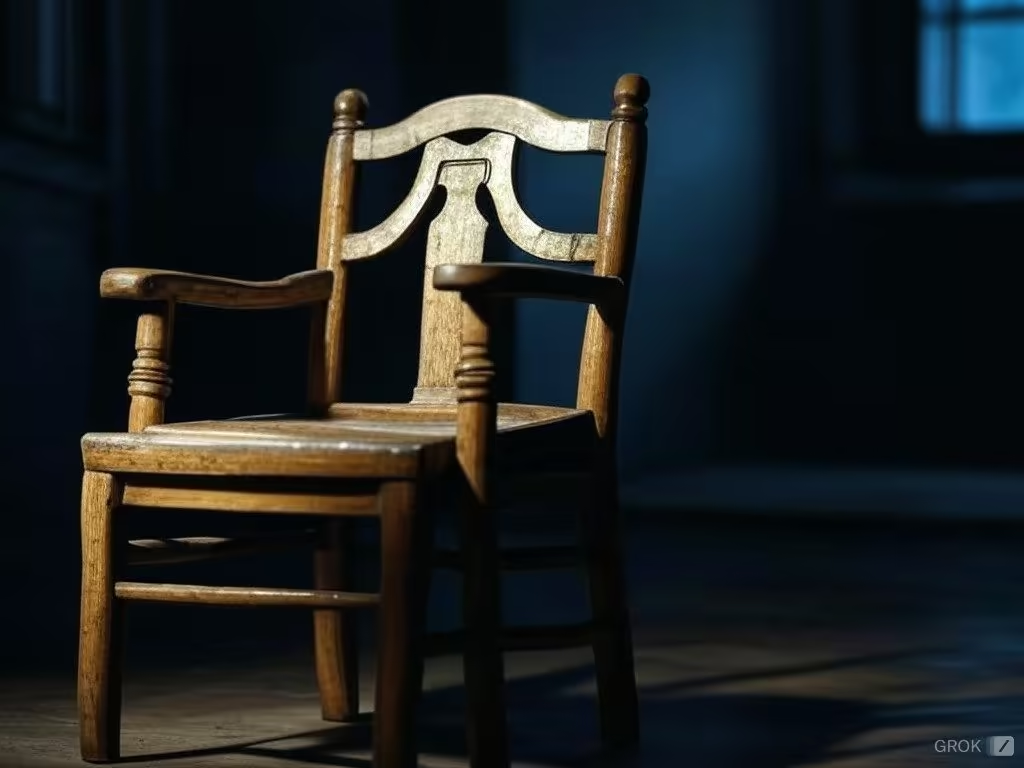
At the moment our cabin is deliberately furnished in a minimalist way to support your focus on the inner experience. This means there is no chair in the cabin. There are several reasons for this approach:

  1. Encouraging movement and flexibility
  2. Strengthening awareness of your own body
  3. Deepening the meditative state

Adapting to your needs

We realise that everyone has different preferences and needs. That is why we are happy to accommodate your individual requests. If you would like a chair in the cabin, we will gladly put one there for you. Our aim is for you to feel as comfortable as possible and to be able to make full use of the potential of your dark retreat.

Benefits of a dark retreat

A dark retreat can bring a number of benefits:

  • Better quality sleep
  • Less stress and anxiety
  • Greater creativity and intuition
  • Deeper self-knowledge

Whether you choose a retreat with a chair or without one, we believe you will experience something exceptional. We look forward to your visit and will do everything we can to make your dark retreat an unforgettable experience.

Book now