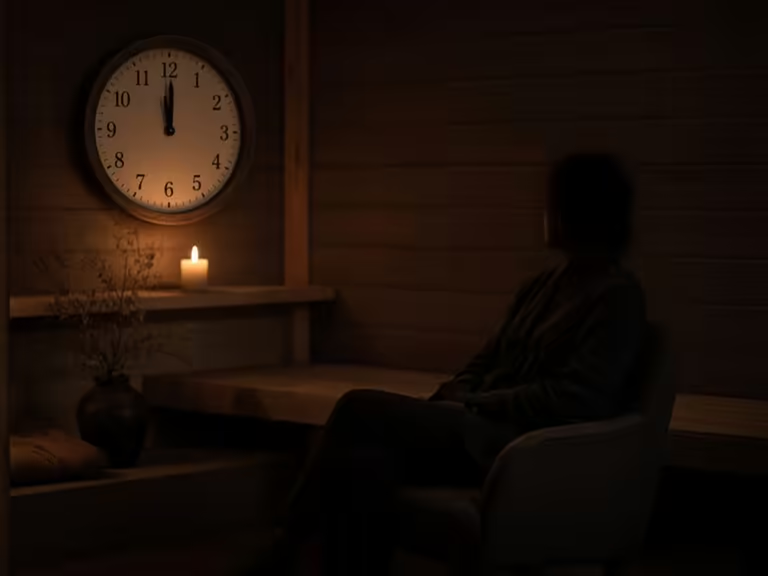
In today’s hectic world, full of constant stimulation, it can be hard to find the time and space for real self-discovery. A therapeutic dark retreat offers a unique opportunity to dive deep into your inner world, and it can lead to significant personal discoveries. Let’s explore how darkness can act as a catalyst for self-knowledge and personal growth.
What is a therapeutic dark retreat?
A therapeutic dark retreat, sometimes also called a cleansing retreat, is an intensive experience in which you spend several days in complete darkness. This environment, free of visual stimuli, creates unique conditions for introspection and self-reflection.
Key aspects of a therapeutic retreat:
- Absolute darkness for several days (usually 3-7 days)
- Minimal outside stimuli
- Professional guidance and support
- A safe and comfortable environment
How darkness supports self-discovery
A dark retreat can be a powerful tool for self-discovery for several reasons:
- No distractions: Without visual stimuli, the mind naturally turns inward.
- Heightened sensitivity: Your other senses sharpen, which leads to a more intense awareness of what is going on inside you.
- Altered states of consciousness: Darkness can bring on states similar to meditation or lucid dreaming.
- Facing yourself: Without outside stimuli, we have no choice but to face our own thoughts and emotions.
Stages of a therapeutic retreat
Self-discovery in the dark usually goes through several stages:
1. Adjustment
In the first hours or days, your body and mind adjust to the new environment. Restlessness or anxiety may come up.
2. Letting go
Once the initial adjustment is over, a phase of letting go follows. The mind calms down and the body relaxes.
3. Introspection
In this stage, people begin to explore their thoughts, emotions and memories more deeply.
4. Insights and discoveries
Many people experience significant personal insights or “aha” moments during their stay.
5. Integration
The final stage involves a gradual return to the light and integrating what you have experienced.
Challenges and frustrations during the retreat
A therapeutic dark retreat isn’t always easy. You may face various challenges:
- Frustration: Feelings of boredom or impatience are common, especially in the early stages.
- Emotional ups and downs: Intense emotions or suppressed memories may surface.
- Physical discomfort: A change in your daily rhythm can cause temporary physical discomfort.
- Cognitive challenges: Some people may experience an altered sense of time or reality.
How a therapeutic retreat helps you know yourself
Despite the challenges, a therapeutic dark retreat can bring real benefits:
- Deeper self-awareness: People often report a better understanding of their motivations and patterns of behaviour.
- Emotional release: Darkness can help release emotions that have been held back for a long time.
- Creative insights: Many people experience a surge in creativity and new ideas.
- Better mental health: Studies suggest that a dark retreat may help in treating depression and anxiety.
- Greater resilience: Overcoming the challenges of the retreat can strengthen your overall mental resilience.
How to prepare for a therapeutic retreat
If you are thinking about a therapeutic dark retreat, here are a few tips to help you prepare:
- Set an intention: Get clear on what you want to achieve during your stay.
- Prepare yourself mentally: Expect to go through a range of emotions and thoughts.
- Talk to a professional: Especially if you have any physical or mental health issues.
- Choose a trustworthy centre: Make sure the place has experience and good references.
- Stay open: Approach the experience with an open mind and without inflated expectations.
Integrating the experience once you’re back
After you return from a therapeutic retreat, it is crucial to bring the insights you have gained into your everyday life:
- Reflect: Write down your thoughts and feelings.
- Be patient: Give yourself time to process the experience.
- Put what you’ve learnt into practice: Gradually make changes inspired by your insights.
- Share: Talk about your experience with people close to you or with a therapist.
- Keep practising: Make regular moments of silence and introspection part of your life.
Conclusion
A therapeutic dark retreat is an intensive path to self-discovery. By stripping away outside stimuli, darkness lets us look into the depths of our inner world and uncover aspects of ourselves that may stay hidden in everyday life. Although the experience can be demanding and at times frustrating, it offers a unique opportunity for personal growth and transformation.
Remember that every path to self-discovery is personal. What works for one person may not suit another. If you decide on a therapeutic dark retreat, approach it with respect for yourself and with openness to whatever the darkness may reveal about your inner world.